
Templates and Data Organization
Function Templates and Class Templates
Templates can implement parametric polymorphism, which parameterizes the types of objects that programs process, enabling a single program to handle multiple different types of objects.
Function Templates
The purpose of function templates is simply to avoid repetitive writing of functions that only differ in the data types they handle, greatly improving code reusability and thus enhancing software development efficiency.
The syntax form adds the statement
template<template parameter list> before the function
definition
Contents of the template parameter list:
- Type parameters: class (or typename) identifier
- Constant parameters: type specifier identifier
- Template parameters: template
class identifier
Example:
1 | //Universal absolute value function |
Function templates are fundamentally different from functions
- Function templates themselves do not generate any object code at compile time; only instances of function templates generate object code.
- Function templates referenced by multiple source files need to be placed in header files along with the function body, not just the declaration like ordinary functions.
- Function pointers can only point to instances of function templates, not to function templates.
Class Templates
Using class templates allows you to define a pattern for a class, enabling certain data members, parameters of certain member functions, return values, or local variables in the class to take any type.
The declaration method of class templates is the same as function templates,
1 | //Define member functions outside the class template |
Linear Groups
Linear groups, as the name suggests, have elements whose positions correspond to their positional relationships. They can be classified into direct access, sequential access, and indexed access. Direct access means jumping directly to the position that needs to be accessed without following order, while sequential access can only access from the beginning according to the element arrangement order.
Direct Access Groups - Array Class
Required to design a variable-length array, click to view source code, and list some syntax points to note.
Syntax rules state that “=”, “[ ]”, “( )”, “->” can only be overloaded as member functions, and the “=” operator function in derived classes will always hide the “=” operator in the base class.
If we want to use Array class objects like ordinary arrays in programs, we need to overload the pointer conversion operator.
Role of Pointer Conversion Operator
To explain the necessity of overloading the pointer conversion operator, let’s first look at the following program:
1 |
|
Here, the first parameter of the read function is an int pointer, and the array name a is an int address constant, so the types match exactly. If we want to use Array class objects like ordinary arrays in programs, modify the main function as follows:
1 | int main () |
What will happen? This time when calling read, it will be found that the actual parameter type is different from the formal parameter type. At this point, the compilation system will attempt automatic type conversion: converting the object name to int * type. Since a is a custom type object, the automatic conversion function provided by the compilation system cannot implement this conversion, so we need to write our own overloaded pointer type conversion function. In C++, if you want to implicitly or explicitly convert an object of custom type T to type S, you can define operator S as a member function of T. This way, when converting a T type object implicitly to S type, or using static_cast to explicitly convert to S type, this member function will be called. The overloaded function of the conversion operator does not need to specify the return value type, because in this case the return type of the overloaded function is consistent with the operator name, so the C++ standard stipulates that return value types cannot be specified for such functions (and void should not be written). When the object itself is a constant, to avoid modifying array content through pointers, the object can only be converted to a constant pointer.
The way to overload the pointer conversion operator in this Array class is as follows:
1 | template<class T> |
Sequential Access Groups - Linked List Class
1 | // LinkedList.h |
Basic operations of linked lists:
- Generate linked list
- Insert nodes
- Search nodes
- Delete nodes
- Traverse linked list
- Clear linked list
Stack Class
Stack class template implementation, click to view source code.
Stack elements can actually be represented using arrays or linked lists.
Basic operations of stacks:
- Initialize
- Push
- Pop
- Clear stack
- Access top element
- Check stack status (full, empty)
Queue Class
Designed as a circular queue using arrays, which is quite troublesome for additions and deletions. Actually, I think using linked lists wouldn’t require circular implementation.
Click here to view source code
Organization of Group Arrays
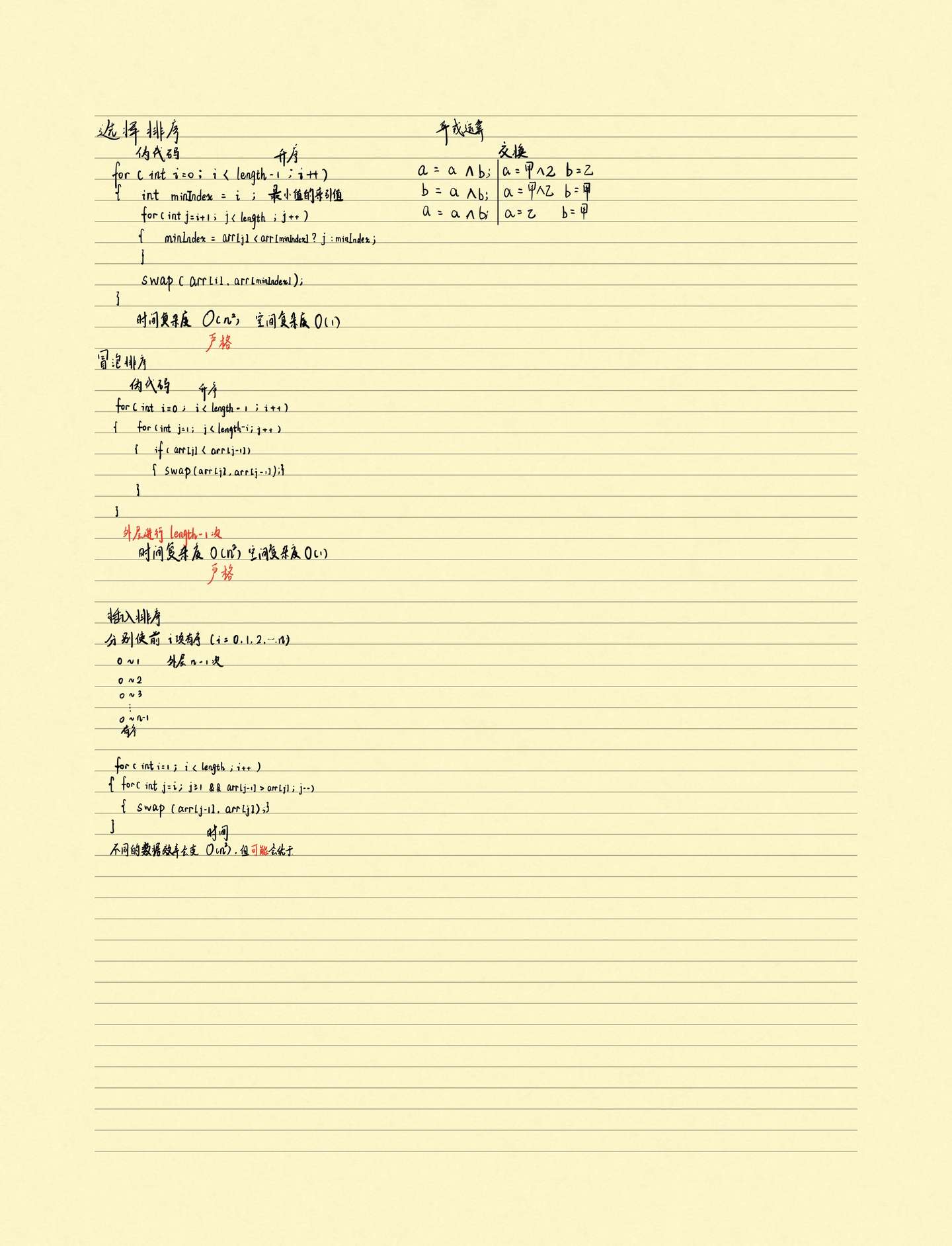
Simple sorting and searching are quite basic, so some images and links are inserted here for better understanding.
I wrote a poem about binary search - labuladong
Comprehensive Example - Improvement of Personal Bank Account Management Program